A decision, an owner, and a next step
Use the last two minutes of a meeting to capture what changed, who will act, and when the team will check back.
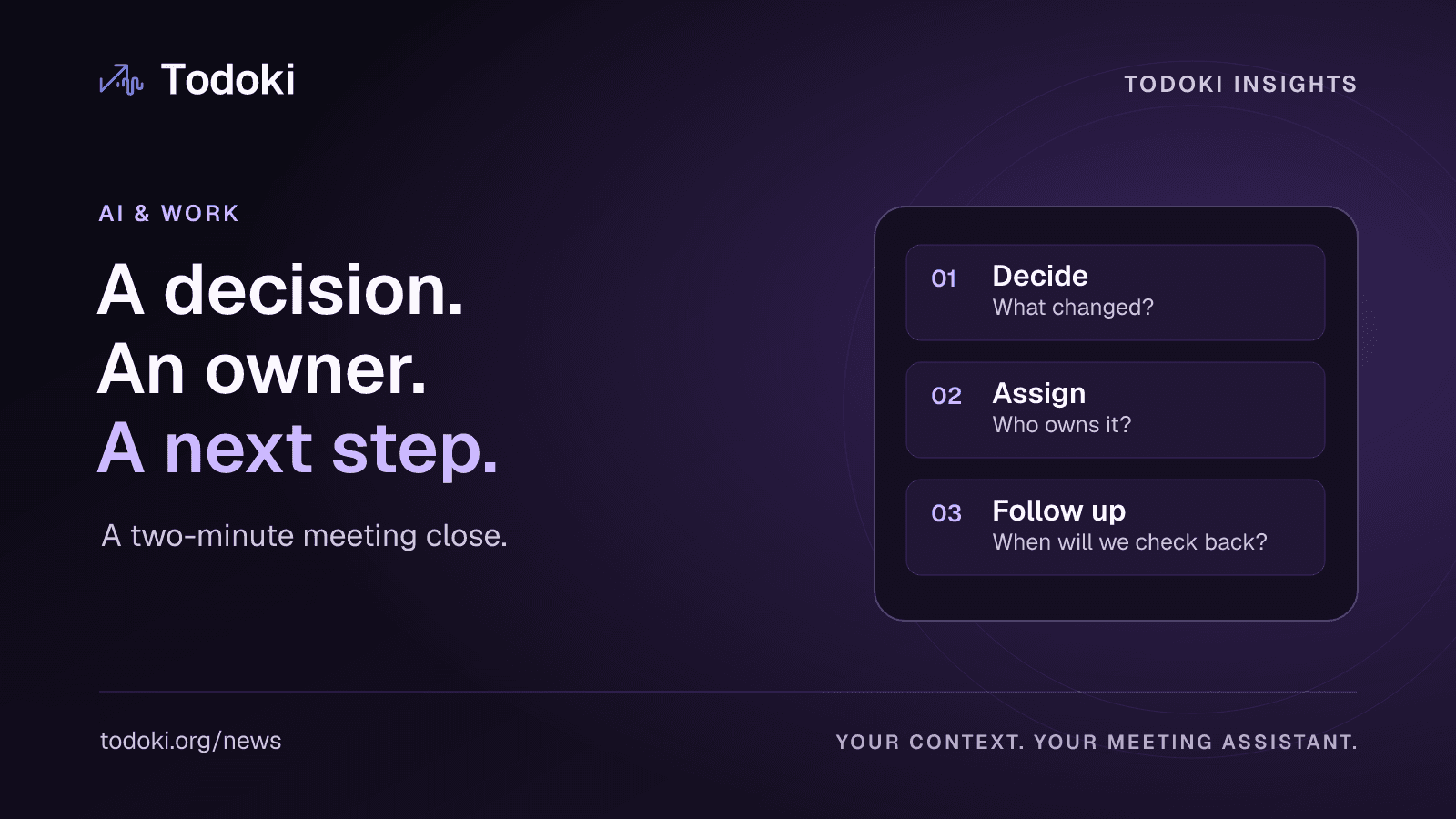
“Let’s follow up on the pilot” sounds clear when everyone is still on the call. The next morning, one person expects an invite to go out and another is waiting for a revised proposal. Spend the last two minutes saying what the team decided and asking the person doing the work to confirm the handoff.
Write down what changed and why
In his guide to architecture decision records, Michael Nygard gives each significant decision a short record with its context, status and consequences. We use the same idea for meeting follow-ups. A one-line reason helps someone who missed the call understand why the decision was made and when it might need revisiting.[1]
Suppose your team agrees to invite ten customers to a pilot so support can review onboarding feedback before widening access. Write that down as a confirmed decision. If the team still needs support’s sign-off, mark the pilot proposal as open and record who will get that sign-off.
End with a two-minute check
- Read back the decision and its reason. Ask the group to correct any wording that overstates what was agreed.
- Ask one person to own the next action. Name the deliverable and agree on a date or a check-in time. For the pilot, Maya could own a ten-customer shortlist due Thursday at noon.
- Write down the unresolved question separately and agree on where to share the follow-up. If nobody has accepted an action, record that it still needs an owner.
Review the handoff before sending it
Send the short decision record where your team already checks for decisions, and put the task where its owner tracks work. When an AI assistant drafts the recap, compare the decision and owner against the meeting evidence before distributing it. Todoki lets you inspect a decision’s source and link a reviewed action to that decision.[2]
At the next meeting, pull up that one record. Check whether the task was completed, whether anything is blocking it, and whether the reason for the original decision still holds.
Sources
- Documenting Architecture DecisionsCognitectPublished · Accessed
- Separate decisions from discussionTodoki GuideAccessed